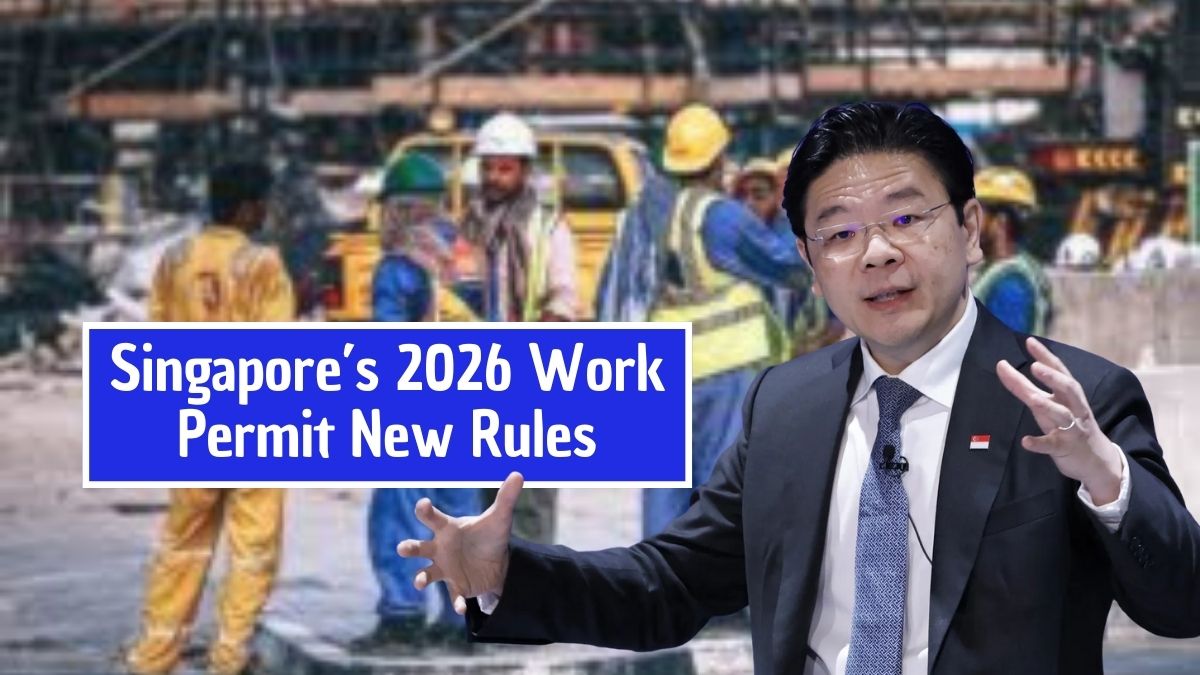
Singapore’s work permit system is undergoing a major transformation in 2026, with a renewed focus on balancing foreign labor needs with local workforce protection and sustainable economic growth. The updated structure is built to ensure long-term manpower stability, improved worker welfare, and stronger employer accountability, all while promoting skills-based employment.
Rising Costs and Labor Shifts Prompted Reform
In recent years, labor demands have evolved, and the cost of living has climbed across Singapore. These changes made it essential for the government to revise the work permit framework. Authorities are now prioritizing higher productivity, less reliance on low-skilled foreign labor, and better alignment with industry-specific needs.
New Eligibility Rules Focus on Real Industry Needs
One of the most noticeable changes in 2026 is the tightening of eligibility rules. Under the revised system:
- Permits are issued based on sector-specific demand
- Criteria related to nationality, age, and job roles have been clarified
- Applications must now justify the real need for foreign hires
This shift is meant to prevent the misuse of work permits and ensure they are only issued where absolutely necessary.
Sector-Based Quotas Remain, But With Adjustments
Quotas and levy systems still apply to key sectors such as:
- Construction
- Manufacturing
- Marine
- Service industries
However, quota thresholds have been recalibrated in certain industries to avoid disruption of major infrastructure and economic projects. The government continues to encourage businesses to embrace automation and to hire more local workers, but has made room for flexibility where critical talent is scarce.
Employers Face Higher Levies and Accountability
In 2026, levy costs for employing foreign workers have been updated. This change is intended to:
- Strengthen safeguards for workers
- Prevent wage exploitation
- Push companies to focus more on upskilling their teams
Employers are now expected to show clear commitment to worker well-being, from fair wages to proper living conditions.
Health Insurance Rules Get Tougher in 2026
To protect foreign workers better, minimum health insurance coverage has been significantly raised:
- Employers must now provide broader, higher-value insurance plans
- Medical and accident-related costs must be more fully covered
- Insurance claims are expected to be processed faster and more transparently
This measure reduces financial risk for both the worker and employer, ensuring medical emergencies don’t turn into long-term financial burdens.
Digital Transformation Speeds Up Work Permit Processing
A key feature of the 2026 update is the move toward digitalization. Work permit applications and services have shifted to fully online platforms, including:
- New applications
- Permit renewals
- Record updates
- Compliance and levy tracking
This paperless model cuts down bureaucracy, saves time, and ensures that records are better maintained.
Employers Must Think Long-Term, Not Just Hire Fast
Singapore’s message to employers is clear: don’t just hire to fill gaps—plan for the future. The 2026 framework emphasizes:
- Skills development
- Manpower planning
- Long-term employment stability
Short-term hiring practices are being discouraged. Instead, businesses are urged to invest in training, retain productive workers, and build sustainable workforce models.
What These Changes Mean for Foreign Workers
The 2026 reform also brings positive news for foreign employees. Although criteria to enter Singapore have become stricter, those who qualify will benefit from:
- More stable employment terms
- Better medical protection
- Transparent hiring practices
- Stronger legal rights and access to information
The goal is to attract talented, skilled individuals who can contribute meaningfully to Singapore’s long-term growth.
Balancing Local and Foreign Talent
Singapore’s labor strategy is not about shutting doors—it’s about strategic hiring. Foreign workers continue to be important, especially in sectors where local talent is limited. But the emphasis is now on quality over quantity, with a clear aim to:
- Boost domestic workforce participation
- Promote fair opportunities for locals
- Use foreign labor as a complement, not a replacemen
The Road Ahead for Work Permits in Singapore
With the 2026 update, Singapore is building a high-skill, high-productivity economy. The government’s approach is to:
- Reduce abuse of work permit schemes
- Make the system digitally efficient
- Strengthen protections for all workers
As the country adapts to global workforce shifts, it remains committed to inclusive growth and responsible foreign manpower policies.